Top 10 Shopify Beauty Stores in 2025: From Fenty's $600M to Glossier's Cult Following
John Choi
E-commerce StrategyFounder of Rivalert
The beauty industry on Shopify is a $600 million+ playground at the top end. Celebrity-founded brands dominate headlines, but the real story is in their execution—from AI shade finders to subscription models that lock in customers for years.
We analyzed the top Shopify beauty stores by revenue and identified the specific strategies driving their success. Whether you're launching a new skincare line or scaling an existing cosmetics brand, these 10 stores reveal what actually works.
The Top 10 Shopify Beauty Stores in 2025
Revenue Context
Beauty store revenues vary significantly between DTC sales (Shopify stores) and total retail including Sephora, Ulta, and other partners. Glossier's Shopify store generated ~$100M directly in 2024, with total retail projected at $200-250M. Morphe underwent restructuring in 2023 after bankruptcy and has not disclosed current revenue figures—we've included them for their influential model and 33% year-over-year growth trajectory.
1. Fenty Beauty: The Inclusive Disruptor
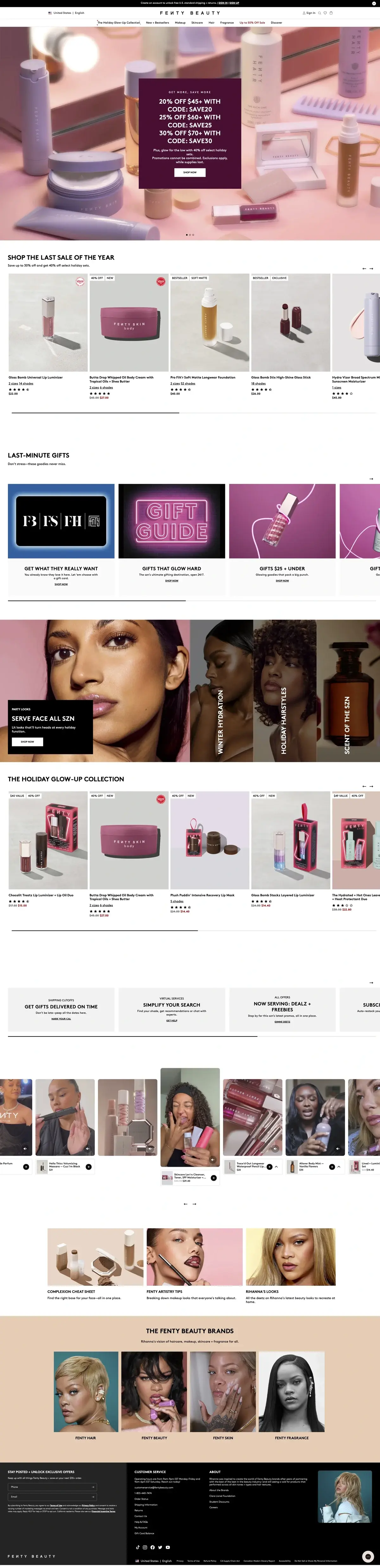
Fenty Beauty launched with 40 foundation shades in 2017—an industry-leading range at the time—and generated $100 million in its first 40 days.
Key Statistics
- Revenue: $600+ million annually
- Valuation: $1-2 billion (LVMH holds 50% stake)
- Availability: 800+ retail locations via Sephora, Ulta, and other partners
What Makes Them Win
Shade Range as Strategy: Before Fenty, most brands offered 15-20 foundation shades. Fenty's 40-shade launch wasn't just inclusive—it was a competitive moat. Matching this range requires significant inventory investment.
Virtual Try-On Technology: AI-powered shade matching reduces return rates and increases conversion. Customers can test foundations before purchasing.
Professional Photography: Every product features studio-quality imagery on diverse skin tones, making the shopping experience aspirational.
Lessons for Your Store
- Inclusivity isn't a marketing message—it's a product strategy
- Virtual try-on tools reduce friction in color cosmetics
- Show your products on customers who look like your customers
2. Rare Beauty: Mission-Driven Beauty
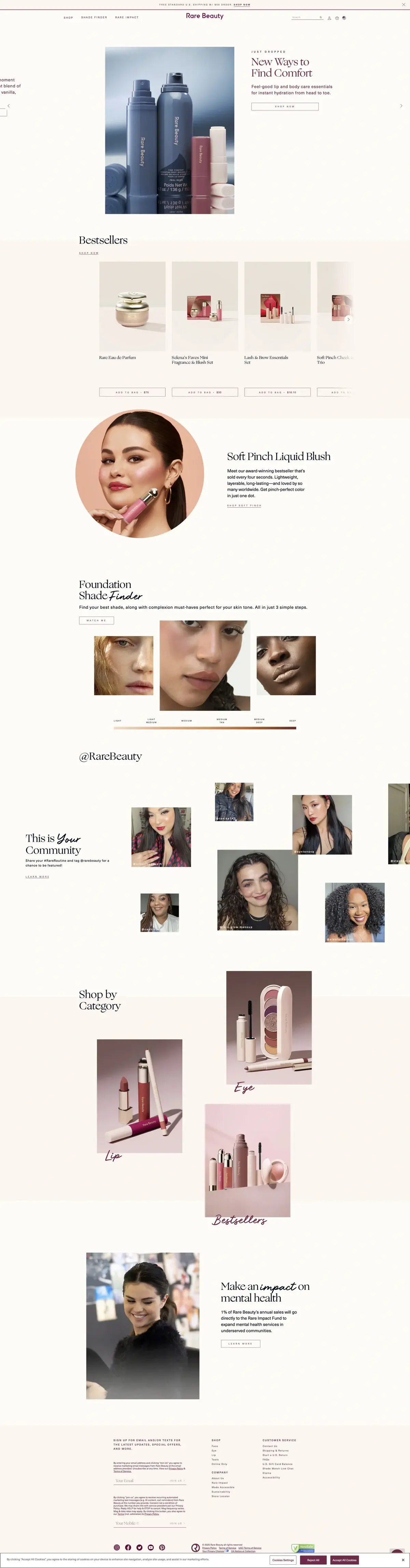
Selena Gomez's Rare Beauty generated $400+ million in 12 months by integrating mental health advocacy into every aspect of the brand.
Key Statistics
- Net Sales: $400+ million (12 months ending February 2024)
- Valuation: $2+ billion
- Top Product: Soft Pinch Liquid Blush ($70M in annual sales alone)
What Makes Them Win
Rare Impact Fund: 1% of all sales goes to mental health services. This isn't a quarterly campaign—it's structural.
Self-Acceptance Messaging: Marketing focuses on embracing uniqueness rather than "fixing" perceived flaws. The brand name itself reinforces this.
Product Innovation: Liquid blush went viral for its pigmentation and buildability, earning the product attention independent of celebrity backing.
Lessons for Your Store
- Authentic mission integration builds loyalty beyond products
- Celebrity brands still need genuinely good products
- Viral-worthy product innovation drives organic reach
3. Hismile: Oral Care Reimagined
Australian brand Hismile positioned teeth whitening as beauty, not dental care, generating over $300 million annually.
What Makes Them Win
Category Positioning: Instead of competing with Crest in the dental aisle, Hismile positioned alongside beauty brands. The aesthetic, packaging, and marketing all say "beauty product."
Flavor Innovation: Purple toothpaste for color-correcting, coffee-flavored options, and limited-edition collaborations make mundane oral care interesting.
Membership Model: $19.99/month gets free shipping and exclusive products, creating predictable recurring revenue.
Lessons for Your Store
- Category positioning can completely change your competitive set
- Making boring products exciting creates differentiation
- Membership models work even in consumables
4. Glow Recipe: K-Beauty Meets Mainstream
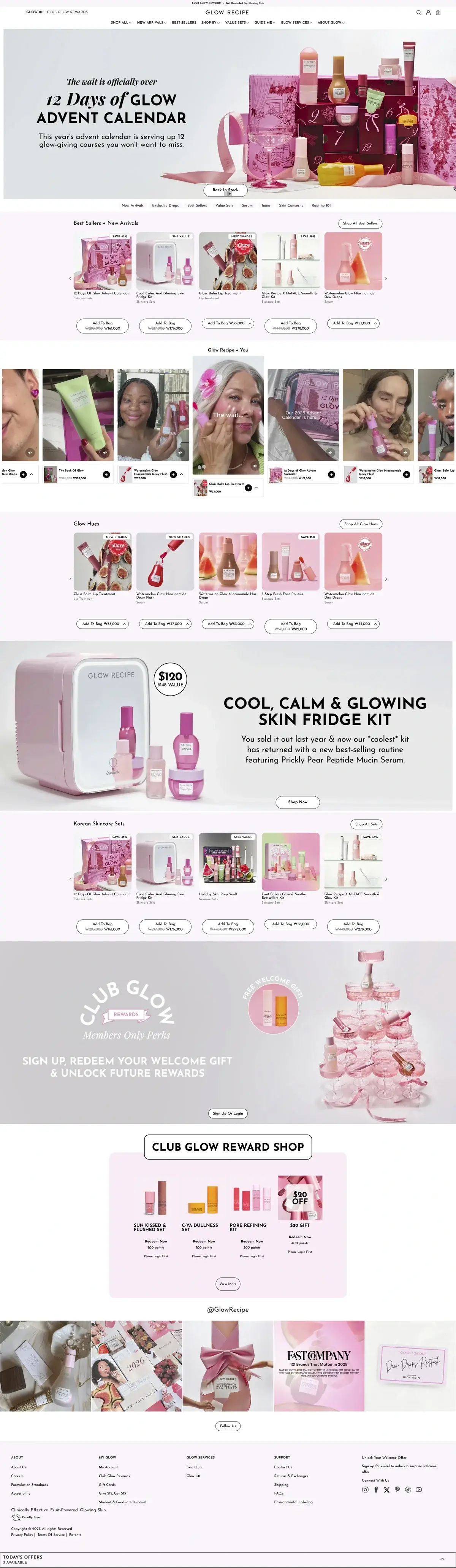
Glow Recipe brought K-beauty principles to American consumers, building a $300 million business through approachable, fruit-based skincare.
Key Statistics
- Revenue: $300 million (2023)
- Team Size: 70+ employees
- Top Products: Watermelon dew drops and toners account for 41% of business
What Makes Them Win
Ingredient Storytelling: Watermelon, avocado, plum—each hero ingredient has a story. This makes skincare feel fun rather than clinical.
Routine Bundling: Pre-built routines simplify decision-making for skincare newcomers.
Education Content: How-to videos and ingredient guides build trust and reduce purchase anxiety.
Lessons for Your Store
- Hero ingredients create memorable brand associations
- Simplify complex purchasing decisions
- Education builds trust and reduces returns
5. Glossier: Community-Built Beauty
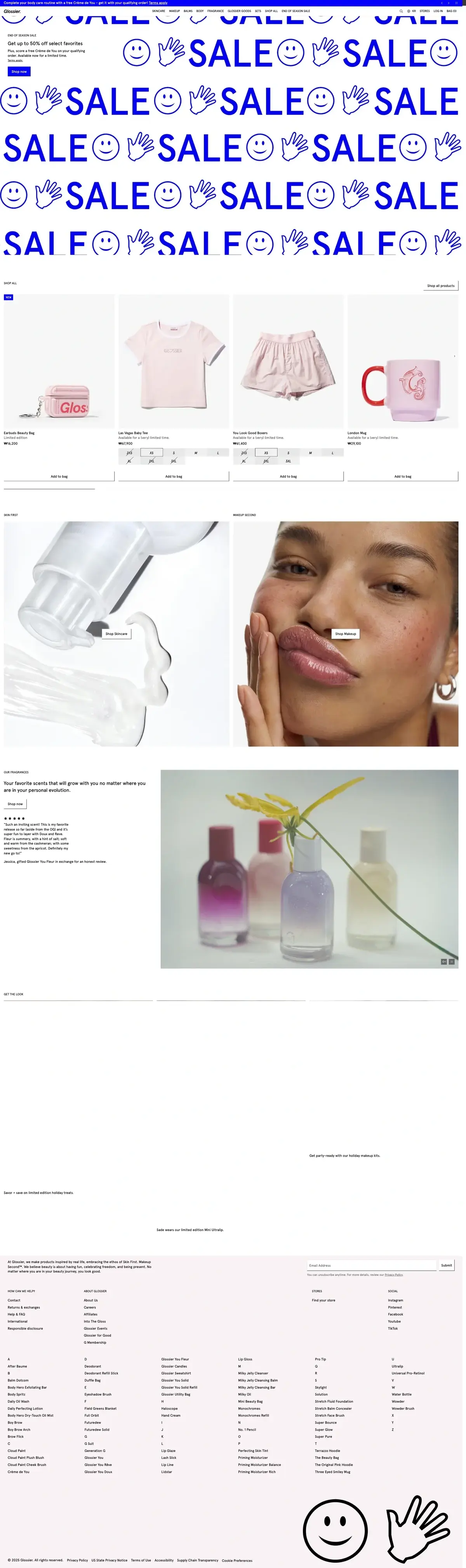
Glossier grew from a beauty blog (Into The Gloss) to $200-250 million in retail sales through community-first product development.
Key Statistics
- Total Retail Sales: $200-250 million projected (2024)
- Shopify Store Revenue: ~$100 million (2024)
- Conversion Rate: 3.5-4.0% (near the ~5.1% industry benchmark)
- Global Rank: #2,081 among e-commerce retailers (2024)
What Makes Them Win
Blog-to-Brand Pipeline: Glossier's founder Emily Weiss interviewed women about their routines for years before launching products. The community defined what to build.
Minimal Aesthetic: Clean, millennial pink branding is instantly recognizable. The aesthetic extends to packaging, making every delivery Instagram-worthy.
Clinical Ingredient Focus: Detailed ingredient breakdowns appeal to increasingly educated consumers who want to understand what they're putting on their skin.
Community-Driven Growth
Glossier raised $266 million in funding and achieved a $1.8 billion valuation at peak. Their 3.5-4.0% conversion rate may be near industry average (~5.1%), but their community-first approach—building audience before products—created exceptional brand loyalty and organic growth.
Lessons for Your Store
- Listen to your community before creating products
- Consistent aesthetic creates brand recognition
- High conversion rates come from product-market fit, not just optimization
6. Kylie Cosmetics: The Lip Kit Empire

Kylie Cosmetics pioneered the celebrity beauty brand model, generating over $200 million annually (Coty acquired 51% for $600 million in 2019, valuing the brand at $1.2 billion).
What Makes Them Win
Product-Market Timing: Kylie's lips were already a cultural conversation. The Lip Kit gave fans a way to participate.
TikTok Integration: Native TikTok shopping features let customers purchase directly from viral content.
Bundle Strategy: "Build your routine" options and kit bundles increase average order value.
Lessons for Your Store
- Timing matters—launch into existing conversations
- Native social commerce reduces friction
- Bundles and kits increase AOV
Automate Your Competitor Monitoring
Stop manually checking competitor prices. Rivalert tracks changes and sends you alerts automatically.
7. Kosas: Clean Makeup That Performs
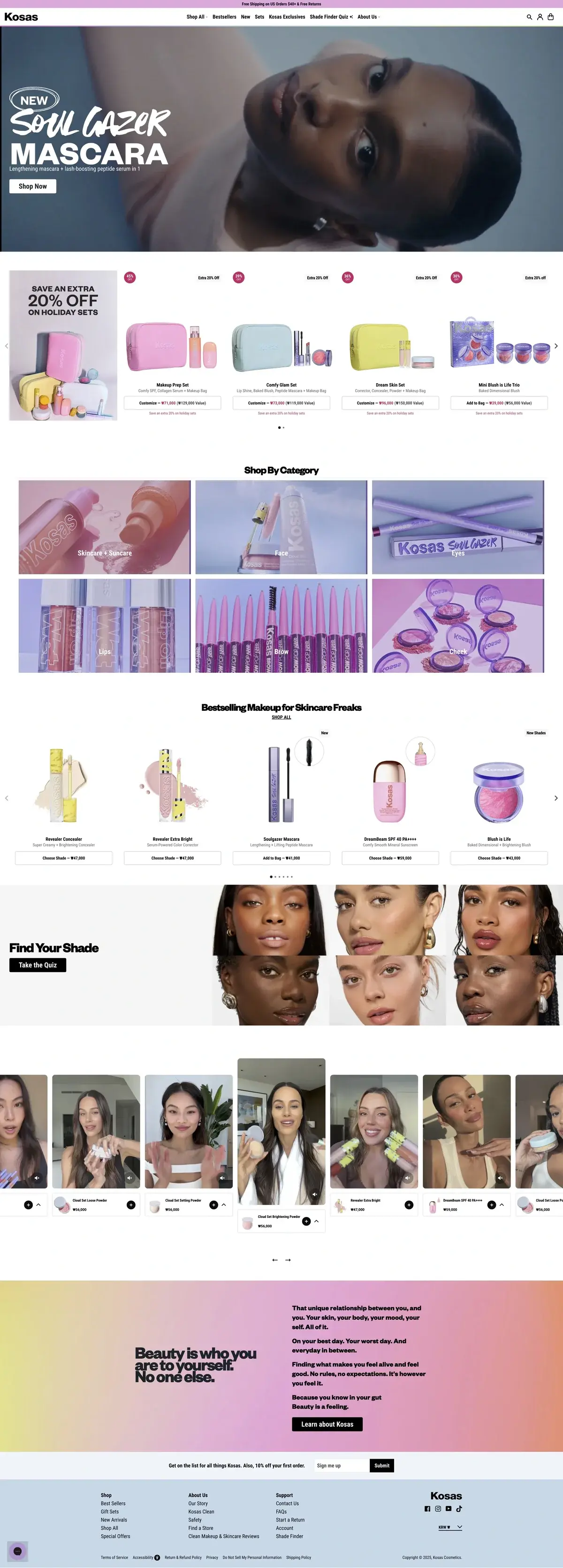
Kosas solved the "clean makeup" dilemma: products that are ingredient-conscious AND high-performing, building a $120 million business in 2023 with projections to reach $150 million in 2024.
Key Statistics
- Revenue: $120 million (2023), up from $80 million in 2022
- Growth: 50% year-over-year
- 2024 Forecast: $150 million
- Retail Presence: #5 clean cosmetics brand at Sephora
What Makes Them Win
Performance Claims: Unlike some clean brands that sacrifice efficacy, Kosas products compete with conventional makeup on coverage, staying power, and finish.
Shade Finder Quiz: Interactive quiz reduces friction for foundation and concealer purchases—the categories with highest return rates.
Build-Your-Own Kits: Custom bundle options let customers create personalized sets at a slight discount.
Skincare-Makeup Hybrid: Products like their Revealer Concealer and Wet Lip Oil Gloss blur the line between makeup and skincare, appealing to ingredient-conscious consumers.
Lessons for Your Store
- Don't sacrifice performance for positioning
- Quizzes reduce returns in color cosmetics
- Custom bundles increase engagement and AOV
- Category-bridging products (makeup + skincare) create differentiation
8. Pacifica: The Clean Beauty Pioneer
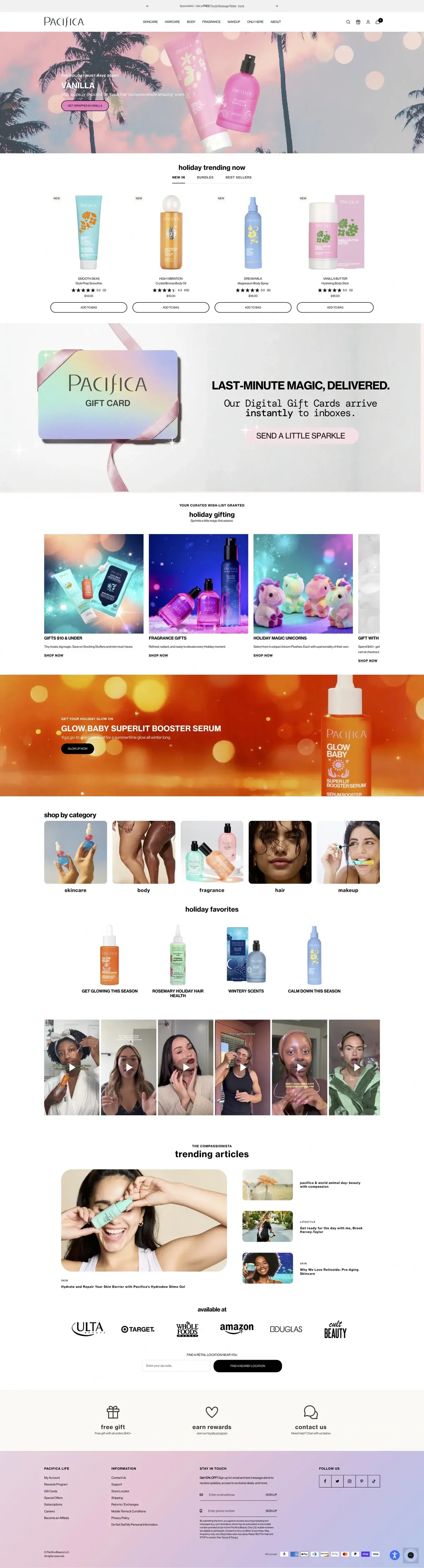
Pacifica has been vegan and cruelty-free since 1996, long before it was trendy—now generating $100-125 million annually.
Key Statistics
- Revenue: $100-125 million (2024 expected)
- Founded: 1996 (nearly 30 years of consistency)
- Product Range: 300+ SKUs across skincare, color cosmetics, haircare, fragrance, and more
- Distribution: Target, Ulta, and direct-to-consumer
What Makes Them Win
Consistency: Nearly 30 years of commitment to vegan, cruelty-free formulations builds genuine credibility that newer brands can't match.
Accessible Price Points: Clean beauty doesn't have to be expensive. Pacifica offers entry-level pricing in a category that often skews premium.
Wide Distribution: Available at Target, Ulta, and direct-to-consumer, meeting customers wherever they shop.
Category Expansion: From fragrance origins to a full beauty ecosystem spanning skincare, makeup, haircare, and supplements.
Lessons for Your Store
- Long-term commitment to values builds credibility
- Clean/sustainable doesn't have to mean expensive
- Multi-channel presence reaches more customers
- Category expansion can multiply revenue opportunities
9. Morphe: The Influencer Model (A Cautionary Tale)
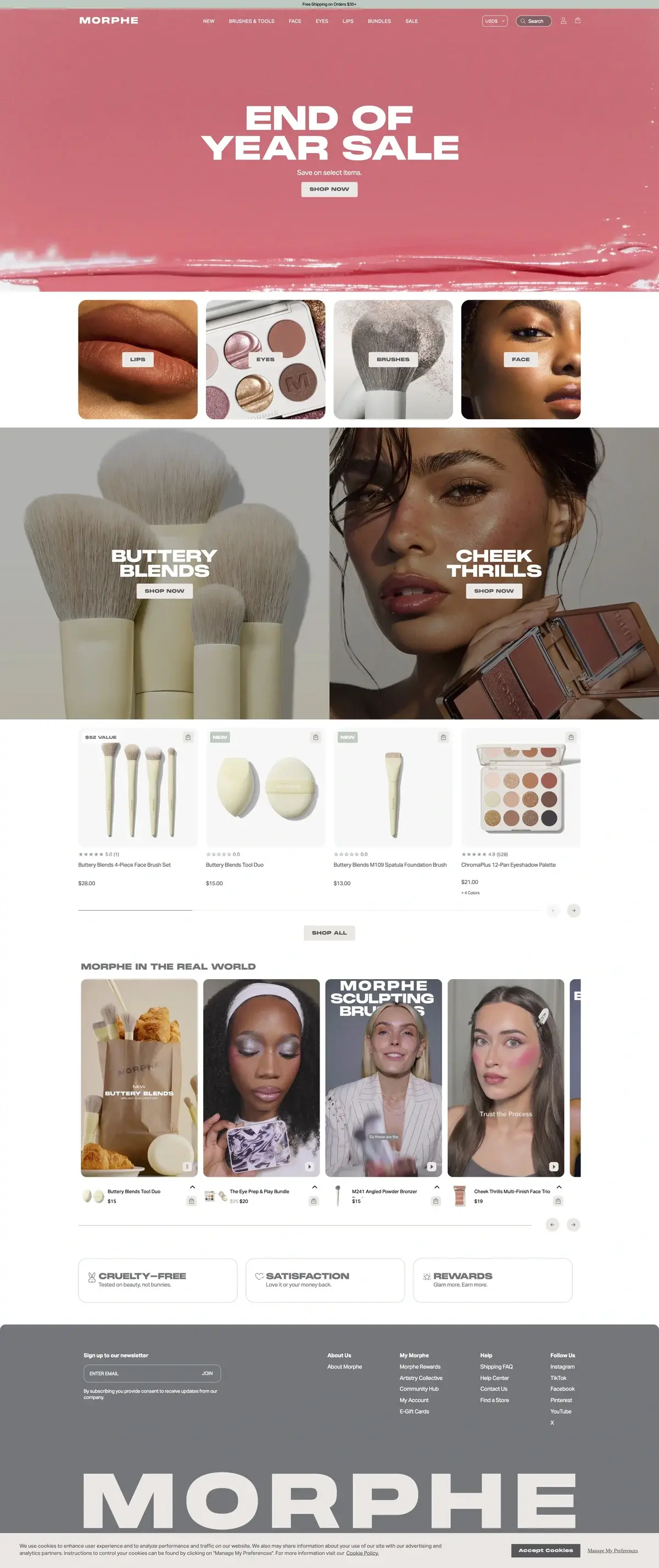
Morphe built a $400 million business at its peak through relentless influencer collaborations—then filed for bankruptcy in 2023. After restructuring, they're rebuilding with strong growth momentum.
The Rise and Fall
What Made Them Win (2015-2021):
- Volume of Collaborations: James Charles, Jaclyn Hill, and dozens of beauty influencers had Morphe collections
- Accessible Pricing: Professional-quality at $3 lip liners and $25 palettes enabled impulse purchases
- Peak Revenue: $400 million in 2019 ($500 million reported by some sources)
- Peak Valuation: $2 billion in 2019 after General Atlantic investment
What Went Wrong:
- Revenue dropped to $295 million by 2021
- Over-reliance on influencer partnerships became a liability when controversies hit
- Closed all U.S. retail stores in January 2023
- Parent company Forma Brands acquired out of bankruptcy for $690 million in debt relief by Cerberus Capital Management and &Vest
The Comeback
Morphe has not disclosed current revenue figures but reports 33% year-over-year sales growth in 2024-2025. Available at Ulta Beauty and focusing on digital-first strategy, the company says it could approach pre-bankruptcy sales within 3-5 years.
Lessons for Your Store
- Diversify marketing channels—don't over-rely on any single strategy
- Accessible pricing works, but brand reputation is fragile
- Bankruptcy isn't the end—restructuring can enable stronger foundations
- Sustainable growth beats hype-driven spikes
10. Cocokind: Radical Transparency
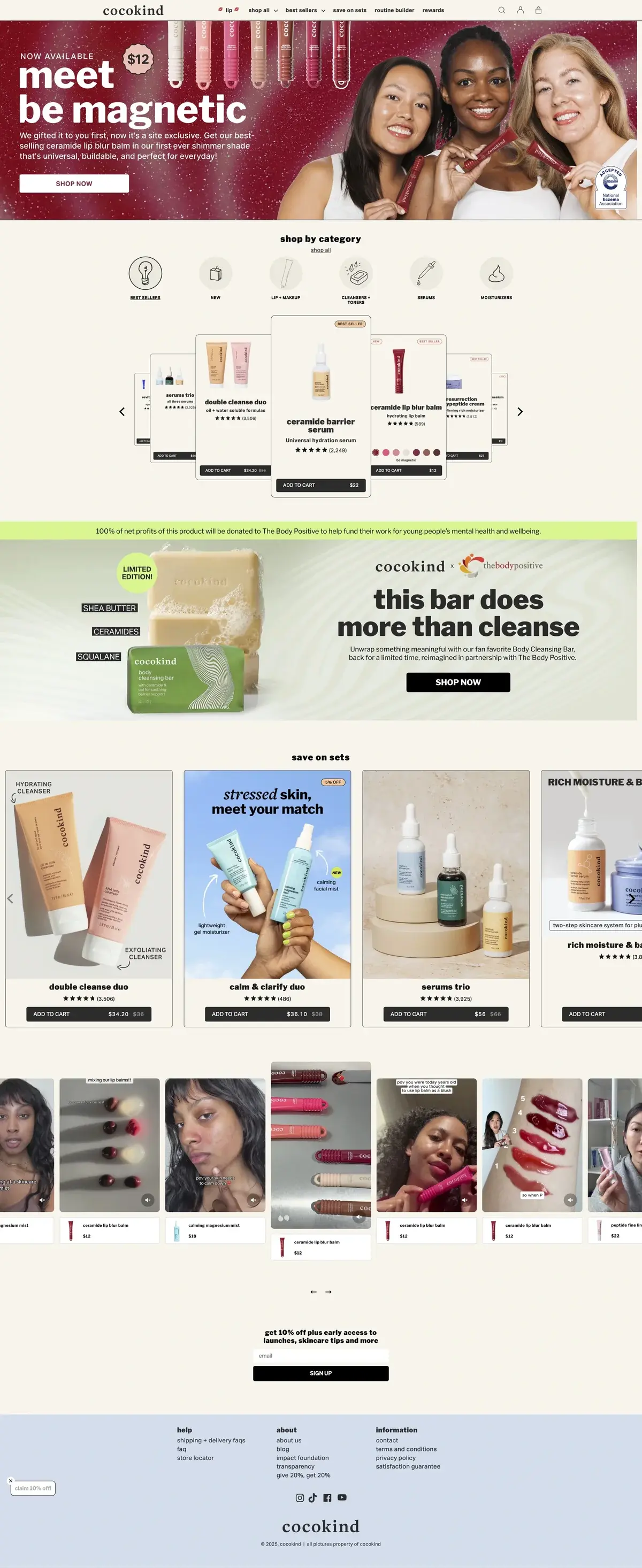
Cocokind publishes the actual cost breakdown of every product, showing customers exactly what they're paying for. With estimated revenue of $10-15 million, they prove that transparency can be a viable business model.
What Makes Them Win
Price Transparency: Like Everlane in fashion, Cocokind shows raw material costs, labor, packaging, and markup. Customers appreciate honesty—they believe what's inside the bottle should cost more than the bottle itself.
Routine Builder Quiz: Interactive tool recommends products based on skin concerns, building complete routines.
Subscription Discounts: 8% off for subscribe-and-save creates predictable revenue and locks in customers.
Accessible Retail: Available at Target, Ulta Beauty, and Whole Foods, making conscious skincare accessible to mainstream shoppers.
Lessons for Your Store
- Transparency about pricing can increase willingness to pay
- Quizzes personalize the shopping experience
- Subscription models work particularly well for consumables
- Values-driven positioning resonates with younger consumers
Conversion Strategies From Top Beauty Stores
The highest-performing Shopify beauty stores share specific tactics:
Virtual Tools & AI
- Shade finders significantly reduce foundation returns—color cosmetics have among the highest return rates in beauty
- Virtual try-on increases conversion for color cosmetics
- Skin analysis quizzes personalize recommendations
Subscription & Loyalty
- Subscribe-and-save (5-20% off) locks in repeat purchases
- Tiered loyalty programs incentivize ongoing engagement
- Membership models create predictable revenue
Social Proof
- Customer reviews prominently displayed (not hidden)
- User-generated content galleries show real results
- Before/after imagery (where appropriate and authentic)
Product Bundling
- Pre-built routines reduce decision fatigue
- "Build your own" kits increase engagement
- Limited-edition bundles create urgency
Monitor Beauty Competitor Pricing
Beauty is intensely competitive, with prestige growing 7% while mass market grows just 3%. Rivalert monitors your competitors' Shopify stores in real-time, alerting you when they change prices, launch new products, or run promotions.
What This Means for Your Beauty Store
The top Shopify beauty stores demonstrate clear patterns:
- Technology reduces friction - Virtual try-on, shade finders, and AI recommendations
- Mission builds loyalty - Whether inclusivity (Fenty), mental health (Rare Beauty), or sustainability (Pacifica)
- Subscriptions create stability - Consumables benefit from recurring models
- Community informs products - The best brands listen before launching
- Competitive awareness is essential - Top performers know what competitors do immediately
- Pricing power matters - Even a 1% price increase can boost beauty profits by 11%
Beauty on Shopify rewards brands that combine great products with excellent execution. Study these examples, identify strategies that fit your positioning, and execute consistently.
Frequently Asked Questions
Fenty Beauty leads with over $600 million in annual revenue, followed by Rare Beauty ($400M+ in 12 months ending February 2024), Hismile ($300M+), and Glow Recipe ($300M). The mid-tier includes Glossier ($200-250M), Kylie Cosmetics ($200-250M), Kosas ($120-150M), and Pacifica ($100-125M). Revenue varies between direct Shopify sales and total retail including department store partnerships.
References
- Fenty Beauty Marketing Strategy Analysis - TacticOne - Revenue estimates of $600M+ by 2023
- Rare Beauty Exploring IPO or Sale as Revenue Crosses $400M - Business of Fashion - Confirms $400M net sales for 12 months ending February 2024
- Top 50 Shopify Beauty Stores - Omnisend - Industry overview and store rankings
- How Glow Recipe Became a $300 Million Business - Fortune - Confirms $300M revenue for 2023
- Glossier Company Revenue Data - ECDB - $100M DTC revenue on glossier.com in 2024
- Glossier: FUTURE50 2024 - BeautyMatter - Brand performance and market position
- Morphe Brand Closes All US Stores After Bankruptcy - Business of Fashion - Peak valuation of $2B, $400M revenue in 2019
- Morphe Comeback Analysis - Beauty Independent - 33% YoY growth, $295M revenue in 2021
- Pacifica Beauty: FUTURE50 2024 - BeautyMatter - $100-125M expected revenue for 2024
- Kosas Masters the Art of Reinvention - Business of Fashion - $120M revenue in 2023, $150M forecast for 2024
- Hismile Boosts Global Online Sales by 500% - Shopify - $300M annual revenue in 2023
- Kylie Cosmetics Revenue Data - EcommerceDB - $251M e-commerce revenue in 2024
- Rare Beauty Blush Hits $70M in Annual Sales - Billboard - Soft Pinch Liquid Blush revenue
- Cocokind Revenue Data - Growjo - Estimated $10-15M annual revenue range
Try Rivalert Free
Shopify Competitor Price Monitoring. Start your 7-day free trial today.
Start Free Trial