Perfume Market Surges 17% in 2025: Fragrance Growth Data
John Choi
E-commerce StrategyFounder of Rivalert
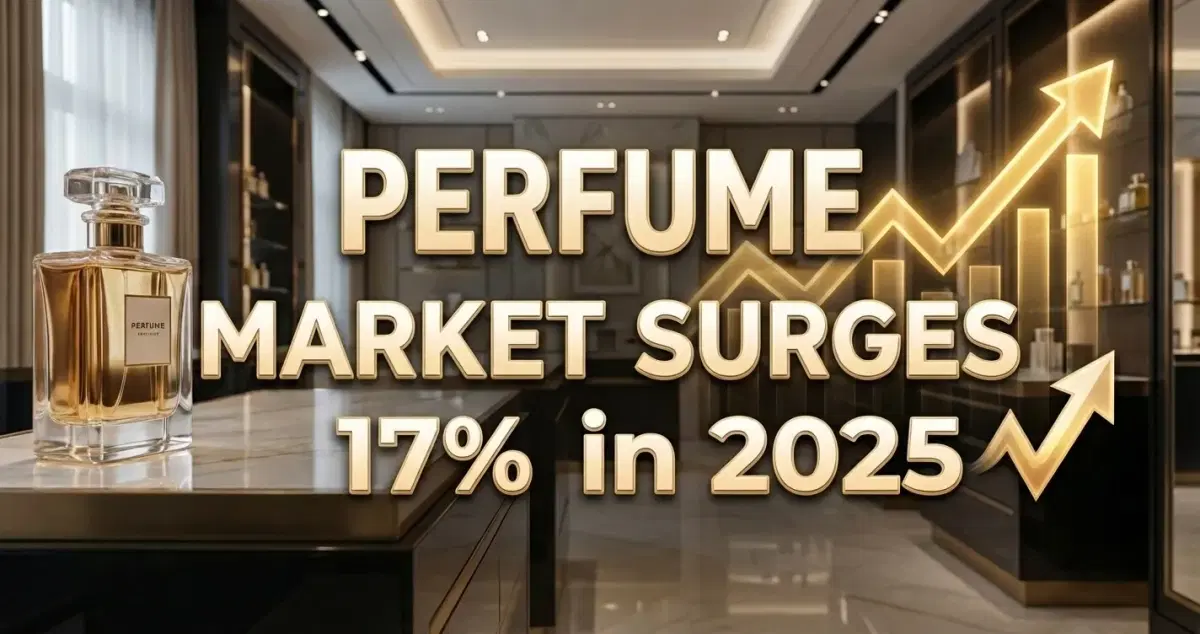
Fragrance isn't just having a moment—it's having a movement. After exploding 12% in 2024 to become U.S. prestige beauty's second-largest category, fragrance continued its dominance through 2025. According to Circana's Q3 2025 report, mass market fragrance surged 17%—making it the fastest-growing category in beauty—while prestige fragrance grew 6% to reach $5.9 billion through September.
What makes 2025 remarkable isn't just the growth rates. It's the structural shift in how consumers buy fragrance: discovery sets jumped 41%, travel sizes grew 12% in units, and luxury fragrance brands posted double-digit gains. Euromonitor forecasts fragrance will drive 23% of all beauty industry growth through 2029.
If you're selling perfume, cologne, or beauty products on Shopify, this sustained momentum has major implications for your product mix and pricing strategy.
How Fast Is the Perfume and Cologne Market Growing in 2025?
*2024 prestige fragrance sales calculated from 2025 YTD ($5.9B) adjusted for 6% growth rate.
2024 mass market fragrance growth (+9%) and mini juices/sets growth (+24%) from GCI Magazine/Circana. Travel/mini sizes grew at 2× the overall category rate per Circana H1 2024 data.
2025 Growth at a Glance
2025 Category Comparison (Prestige, YTD Sept)
The 2025 story has two chapters. In mass market, fragrance is the undisputed champion at +17% growth—outpacing every other category by a wide margin. In prestige, hair care edged ahead at +8%, but fragrance's +6% still dwarfs skincare (+1%) and makeup (+3%).
The drivers of this sustained growth:
- Gen Z fragrance culture — scent as identity and mood expression
- Discovery set explosion — 41% growth signals new buying behavior
- "Recession Glam" — affordable luxury positioning resonates
- Scent stacking trend — layering products increases basket size
- Gifting strength — one-third of holiday shoppers plan to gift beauty
A Multi-Year Structural Shift
Fragrance's rise from #3 to #2 in 2024 wasn't a blip—2025 confirms it's the new normal. Euromonitor projects fragrance will contribute 23% of absolute beauty industry growth through 2029. See also: Prestige Beauty Grew 7% While Mass Market Rose Only 3% in 2024.
Why Is Fragrance Pricing Different From Other Beauty Categories?
Fragrance has unique pricing dynamics that differ from other beauty categories:
1. Subjectivity Protects Premium
Unlike skincare (where you can compare ingredients) or makeup (where you can compare shades), fragrance is entirely subjective. A $30 body spray and a $300 niche perfume can't be directly compared—the scent is the scent.
This subjectivity creates pricing power. Customers choose based on how a fragrance makes them feel, not ingredient lists.
2. Brand Story Commands Premium
In fragrance, brand narrative matters enormously:
- Heritage houses (Chanel, Dior) command premiums on reputation
- Celebrity fragrances trade on star power
- Niche brands trade on exclusivity and artistry
- Clean/sustainable brands trade on values
Your brand story directly impacts what you can charge. (Related: How a 1% Beauty Price Increase Generates 11% Profit Growth)
3. Concentration Tiers Create Natural Price Ladder
This built-in tiering allows you to serve multiple price points with the same scent family.
What Pricing Strategies Work in the Fragrance Boom?
1. Why Are Discovery Sets Booming? (+41% Growth)
Mini fragrance sets are booming because they:
- Lower the barrier to trial ($30-50 vs. $100+ for full size)
- Enable "scent wardrobe" collecting
- Drive full-size repurchase
- Reduce return risk for customers
Pricing insight: Discovery sets can carry higher margins per ml than full sizes because customers pay for the variety and experience, not just product volume.
Discovery Sets: The Breakout Format
+41% growth in mini/discovery fragrance sets makes this the fastest-growing format in beauty. If you don't offer discovery-sized options, you're missing the biggest consumer behavior shift of 2025.
2. Limited Editions Command Premium
Fragrance customers are accustomed to limited releases. Strategic scarcity allows you to:
- Test price elasticity on special editions
- Create urgency without discounting
- Build collector behavior
- Justify premium pricing
Automate Your Competitor Monitoring
Stop manually checking competitor prices. Rivalert tracks changes and sends you alerts automatically.
3. Layering Encourages Multi-Purchase
The fragrance layering trend—wearing multiple scents together—creates opportunities:
- Pair complementary scents in sets
- Create "layering notes" products (primers, fixatives)
- Suggest combinations that increase basket size
- Build systems that encourage collecting
4. Seasonal and Occasion Pricing
Unlike makeup (year-round use), fragrance has seasonal associations:
Time your launches and pricing to match these patterns.
Who Are You Competing Against in Fragrance?
Two consecutive years of category-leading growth—12% in 2024, 17% mass/6% prestige in 2025—is attracting new entrants. You're now competing with:
- Established prestige (department store brands)
- Celebrity launches (often exclusive retail partnerships)
- Niche/indie brands (DTC and specialty retail)
- Clean/sustainable brands (values-driven positioning)
- Dupes and alternatives (TikTok-driven comparable scent hunting)
The Dupe Challenge
Fragrance dupes are a growing phenomenon. TikTok creators routinely share "$10 alternatives to $300 perfumes." With price comparison shopping intensifying—shoppers now searching 4+ sites before buying—your defense needs to be strong:
- Emphasize complexity: Cheap dupes capture top notes but rarely match full development
- Focus on experience: Packaging, brand story, and unboxing matter
- Build loyalty: First-mover advantage with your scent
- Monitor dupe pricing: Know what you're being compared to
Track Your Competitive Position
Rivalert monitors competitor Shopify stores including fragrance brands. See when competitors launch new scents, adjust prices, or run promotions—so you can maintain your position in the booming fragrance market.
Who's Winning in Fragrance Growth?
According to Circana's data, luxury fragrance brands are posting double-digit growth rates—outpacing the overall category. The winners share common traits:
Strong Brand Identity
Whether heritage, celebrity, or niche—the strongest brands have clear positioning that justifies their price point.
Multi-Tier Offerings
Brands succeeding offer entry points (discovery sets, travel sizes) alongside premium full sizes. They're not one-price-fits-all.
DTC + Retail Balance
Many fragrance brands are finding success with DTC for education and samples, plus retail partnerships for discovery and gifting.
Innovation Cadence
Regular limited releases and new scents keep customers engaged without devaluing the core line.
Strategic Recommendations
If You're Entering Fragrance
- Start with a focused collection (3-5 scents max)
- Offer discovery/sample options prominently
- Price at or above market—don't enter at the bottom
- Invest in brand story and packaging
If You're Already in Fragrance
- Review your pricing architecture (are tiers clear?)
- Consider strategic price increases on bestsellers (sustained multi-year growth suggests elasticity)
- Prioritize discovery sets—41% growth proves this format resonates
- Add travel/mini sizes (+12% unit growth in 2025)
- Monitor competitor pricing more frequently
If You're Adjacent (Body Care, Candles)
- Fragrance extension is a natural opportunity
- Customers seeking personal fragrance often want home fragrance too
- Cross-category bundling can increase basket size
- Premium scent products can carry premium margins
The Bottom Line
The perfume industry's surge from 2024 into 2025 isn't a temporary spike—it's a multi-year structural shift in the scent industry. With Euromonitor projecting fragrance to drive 23% of all beauty growth through 2029, the cologne market and broader fragrance category have staying power.
The 2025 data tells a nuanced story:
- Mass market (+17%) is where the explosive growth is happening
- Prestige (+6%) continues steady expansion with premiumization
- Discovery formats are the breakout success story (+41% sets, +12% travel sizes)
For beauty Shopify stores, this means:
- Fragrance deserves more attention in your product mix—the growth runway extends to 2029
- Premium pricing is sustainable with strong brand story (luxury brands still posting double-digits)
- Discovery sets are no longer optional—41% growth makes them essential
- Competitor monitoring matters more than ever as the category attracts new players
The fragrance boom isn't just real—it's accelerating in mass market while maturing in prestige. The question is whether your pricing strategy captures both opportunities.
References
2025 Data
- Circana Reports US Beauty Industry Sales Accelerate in Q3 - BeautyMatter
- US Beauty Industry Grows in H1 2025 - BeautyMatter
- U.S. Beauty Industry Posts Modest Growth in H1 2025, Circana Finds - Global Cosmetics News
- Fragrance to Drive 23% of Beauty Growth as 'Recession Glam' Takes Hold - Euromonitor
- Strong Q3 Sales Fuel Optimism for U.S. Beauty This Holiday Season - Premium Beauty News
2024 Data
- U.S. Beauty Industry Sales Grow for the Fourth Consecutive Year, Circana Reports - GlobeNewswire
- U.S. prestige beauty sales rose 7% in 2024 to $33.9 billion, says Circana - Premium Beauty News
- Circana: Beauty U.S. Market Hit $33.9 Billion in 2024 - WWD
- Decoding the 2024-2025 Fragrance Boom: Prestige x Value - Global Cosmetic Industry
- US Beauty Sales Slow in Q1-2024 but Continue to Grow, Circana Reports - Premium Beauty News
- Fragrance and Makeup Drive 8% Growth in US Prestige Beauty Market for 2024 - Cosmetics Design
Try Rivalert Free
Shopify Competitor Price Monitoring. Start your 7-day free trial today.
Start Free Trial